
Industries We Serve
Storm Damage Roof Documentation in Midland, TX
Documenting Hail and Wind Damage Before the Adjuster Meeting
Midland takes real hail and high-wind events some years, and a commercial membrane roof doesn't always show damage the way a homeowner's shingle roof does. Owners need factual documentation of what actually happened to the roof, not a sales pitch tied to what a claim might be worth.
What Hail Actually Does to a Single-Ply Membrane
Hail bruising on TPO or EPDM often shows as a soft depression with no visible puncture, which is easy to miss on a surface walk and easy to argue about later if it isn't documented at the time. Fastener plates can deform under a hard enough strike even when the membrane above looks intact, and that's a hidden weak point that shows up as a leak months later.
On modified bitumen roofs, granule loss on the cap sheet from hail impact is a different failure mode than age-related granule loss from UV wear, and telling the two apart matters when a claim depends on distinguishing storm damage from normal wear. We document impact pattern, density, and location rather than only noting that some granule loss exists somewhere on the roof.
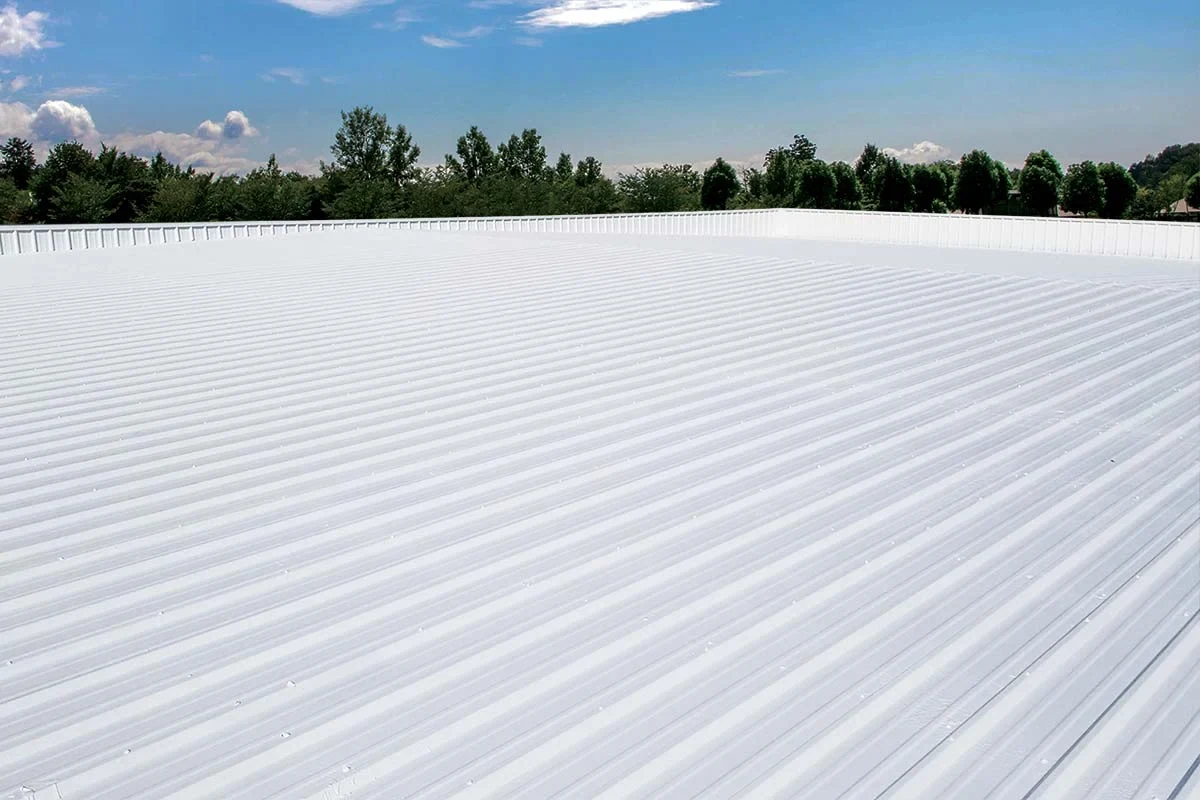
Standing seam and R-panel metal roofs show hail differently again, with dents concentrated on the flat pan between ribs rather than at the seams themselves. We measure dent size and count per test square rather than describing damage in general terms, since that measurement is usually what a metal roof claim comes down to.
Wind Damage Patterns After a High-Wind Gust Event
Wind damage on a commercial roof almost always shows up at the perimeter and corners first, the same uplift zones that matter during original installation. Seam separation, lifted edge metal, and coping failures at the parapet are the early signs, well before anything visible happens in the field of the roof.
Where wind has already opened a seam or lifted edge metal, water gets into the insulation fast. Getting a temporary dry-in in place within days of the event stops secondary interior damage from compounding while the claims process runs its own timeline separately.
Rooftop units themselves take wind damage too, and a curb that's shifted or a unit that's rocked on its mounts can open a gap at the flashing without anything actually failing on the unit itself. We check curb-to-deck attachment on every rooftop unit after a significant wind event, rather than only the membrane around it.
Documentation We Provide for the Claims Process
We put together a dated, location-tagged photo set of every affected area, a moisture scan showing where water has already reached the insulation, and a written scope of repair tied specifically to the damage found on this roof, not a generic template scope. That scope reflects what needs to be fixed, not what would be most profitable for us to sell.
We can walk the roof alongside the owner's chosen adjuster or independent appraiser and answer technical questions about the membrane and fastening pattern directly, without inserting ourselves into the settlement negotiation itself.
Where a repair versus full replacement question comes up, we lay out both cost paths with the same factual approach: what a targeted repair covers, what it doesn't, and what remains at risk if only the documented damage areas get addressed rather than the full roof.
Coating systems already on a roof at the time of the storm complicate the read. A silicone or acrylic coating can mask hail bruising on the membrane underneath during a surface inspection, so we cut test squares through the coating in suspect areas rather than relying on a visual pass over the coated surface alone.
What We Document Per Damaged Roof
- Dated photo set covering every perimeter and corner uplift zone
- Moisture scan results across affected field areas
- Fastener and seam integrity spot checks
- Manufacturer and membrane data to compare repair against replacement cost
- Temporary repair log if emergency dry-in was performed
- Itemized scope of repair tied to the specific damage documented
Temporary Dry-In: The First Days After a Storm
Once a roof has an open seam or missing edge metal, the interior damage clock is already running. Emergency tarp and dry-in work is meant to stop that clock while the claim moves through its own review, not to fix the roof permanently. We keep a log of exactly what temporary work was done and where, since that log becomes part of the record an adjuster reviews later.
Questions Owners Ask During a Claim
Can you guarantee my claim gets approved?
No. We document the damage we find factually and provide a scope of repair; the approval decision belongs to the insurer and adjuster, not to us.
How do you tell hail damage apart from normal wear?
By impact pattern and location. Hail damage clusters and shows a consistent strike pattern; wear-related granule loss or membrane fatigue is diffuse and tied to age, not a single event.
Do you work for the insurance company or for us?
We work for the property owner. We provide the same factual documentation regardless of who's reviewing the claim on the other end.
How fast can you get a temporary dry-in done?
Typically within days of a storm event, ahead of the moisture scan and full documentation that follows.
Will the scope of repair match what my adjuster is looking for?
It's built to reflect the specific damage documented on your roof, which is what an adjuster needs to evaluate the claim on its facts.
Do you document damage to rooftop equipment too, or just the membrane?
Both. Curb attachment and unit mounting get checked after a wind event, since equipment damage is a common gap in a claim that only documents the membrane.