
Commercial Project Types
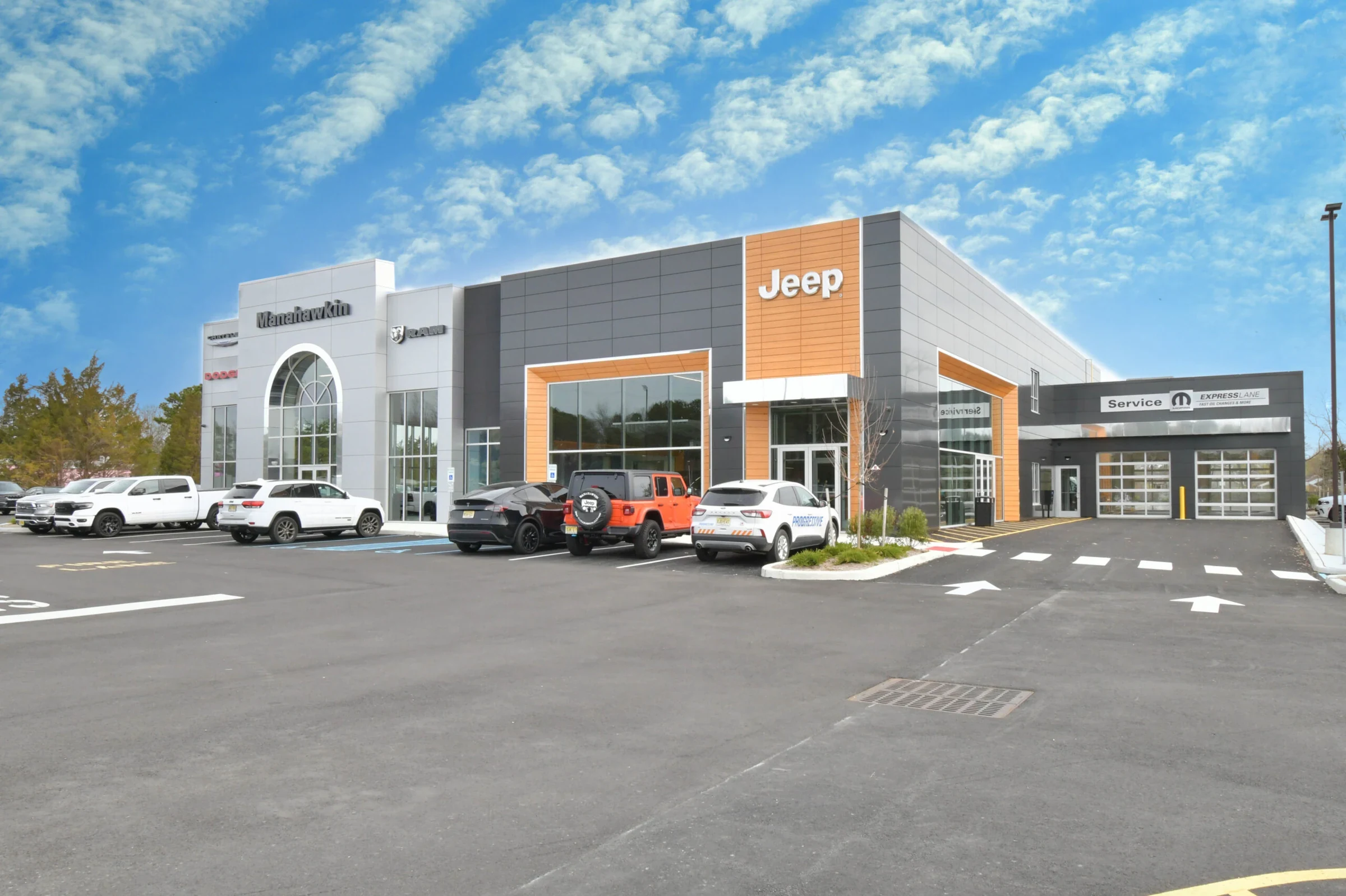
Auto Dealership Roofing in Midland, TX
Matching Roof Systems to Dealership Showrooms and Service Bays
Auto dealerships along Midland's highway frontage typically combine two very different roof types under one property: an architectural standing seam or metal accent roof over the showroom that manufacturers require as part of brand image standards, and a plain low-slope membrane roof over the service department and parts warehouse behind it. Those two systems need to be evaluated and maintained as separate assemblies, even when a single ownership group is responsible for both.
Standing Seam Showroom Roofs Built to Brand Image Standards
Manufacturer facility image programs often specify the standing seam profile, panel finish, and even the seam spacing on a dealership showroom roof, since the roofline is part of the brand presentation visible from the highway. We work within those manufacturer specifications while still making sure the underlying assembly, clip spacing, thermal movement allowance at panel ends, and flashing at hips and ridges, holds up to the wind loads this market actually sees rather than just meeting the manufacturer's minimum aesthetic requirement.
Standing seam panels expand and contract significantly across a Midland summer-to-winter temperature range, and the floating clip system that allows for that movement needs to be installed correctly at the outset, since a clip system installed too tight restricts the panel's ability to move and eventually causes oil-canning or seam stress that shows up as a cosmetic problem long before it becomes a leak.
Low-Slope Membrane Over Service Bays and Parts Storage
Behind the showroom, the service department and parts warehouse typically sit under a standard low-slope membrane roof, TPO or PVC in most of the newer dealership construction we see in this market. This section of roof deals with different stresses than the showroom, rooftop condensers for the service department's larger HVAC load, occasional roof access for lift maintenance, and drainage for a roof section that often sits at a lower elevation than the showroom section next to it.
Where the showroom roof meets the lower service department roof, that height transition needs the same wall-to-roof flashing attention we address on any building with a stepped roofline, and we treat that transition as a distinct detail rather than assuming the two roofing contractors who may have installed each section originally coordinated the flashing correctly.
Drainage Considerations Near Wash Bays and Service Areas
Dealerships with a vehicle wash bay or detail area generate more water discharge near the building than most commercial properties, and while that water discharge is mostly a site drainage concern rather than a roof concern, we do check that roof drain downspouts and site drainage do not compete for the same discharge point in a way that backs up during heavy rain. Roof drain lines routed too close to wash bay discharge piping have caused backup issues on more than one property we have serviced in this market.
- Standing seam clip spacing and thermal movement allowance verified against manufacturer brand specs
- Height transition flashing addressed where showroom and service roofs meet at different elevations
- Rooftop condenser and HVAC curb inspection for the heavier service department load
- Drain routing checked against wash bay and site discharge to avoid backup conflicts
- Skylight or clerestory glazing at the showroom evaluated for weather seal integrity
Skylights and Clerestory Glazing Over the Showroom Floor
Many dealership showrooms use skylights or clerestory glazing to bring natural light onto the vehicle display floor, and those glazing systems sit right at the transition between the architectural standing seam roof and the building's structural frame. We inspect the weather seal around this glazing separately from the standing seam panels themselves, since a seal failure here shows water damage on a showroom floor with vehicles on display, a far more visible and costly problem than the same leak occurring above a parts storage shelf.
Reroofing a Dealership Without Closing the Showroom
A dealership cannot close its showroom during a reroof, and coordinating work above an active vehicle display floor, with inventory that cannot be easily moved and a sales operation that continues throughout, requires careful staging and interior protection that a service bay reroof does not need to the same degree. We schedule showroom roof work in phases that avoid extended exposure over the display floor and protect vehicle inventory with interior tenting during any phase where weather protection is temporarily reduced.
Dealership Owner Questions on Roof Maintenance
Do manufacturer brand standards restrict how a showroom roof can be repaired?
Manufacturer image programs typically specify panel profile and finish, and we work within those requirements while still addressing the underlying wind and thermal performance issues that the brand spec does not always cover.
Why do standing seam panels sometimes show oil-canning after a repair?
Clip systems installed too tightly restrict the panel's normal thermal expansion and contraction, which shows up as visible panel distortion, so correct clip spacing at installation matters as much as the panel product itself.
Does the service department roof need different maintenance than the showroom?
Yes, the service department roof carries heavier HVAC and condenser loads and different membrane wear patterns than the standing seam showroom roof, and we evaluate them as separate assemblies.
Can showroom skylights leak without the roof membrane failing?
Yes, glazing seals around skylights or clerestory windows fail independently of the surrounding roof system, and we inspect them as a distinct component rather than assuming the roof membrane's condition tells the whole story.
How is a dealership reroof scheduled around an operating showroom?
We phase the work to limit extended exposure over the display floor and protect inventory with interior tenting during any temporary reduction in weather protection.