
Commercial Project Types
Warehouse Roofing in Midland, TX
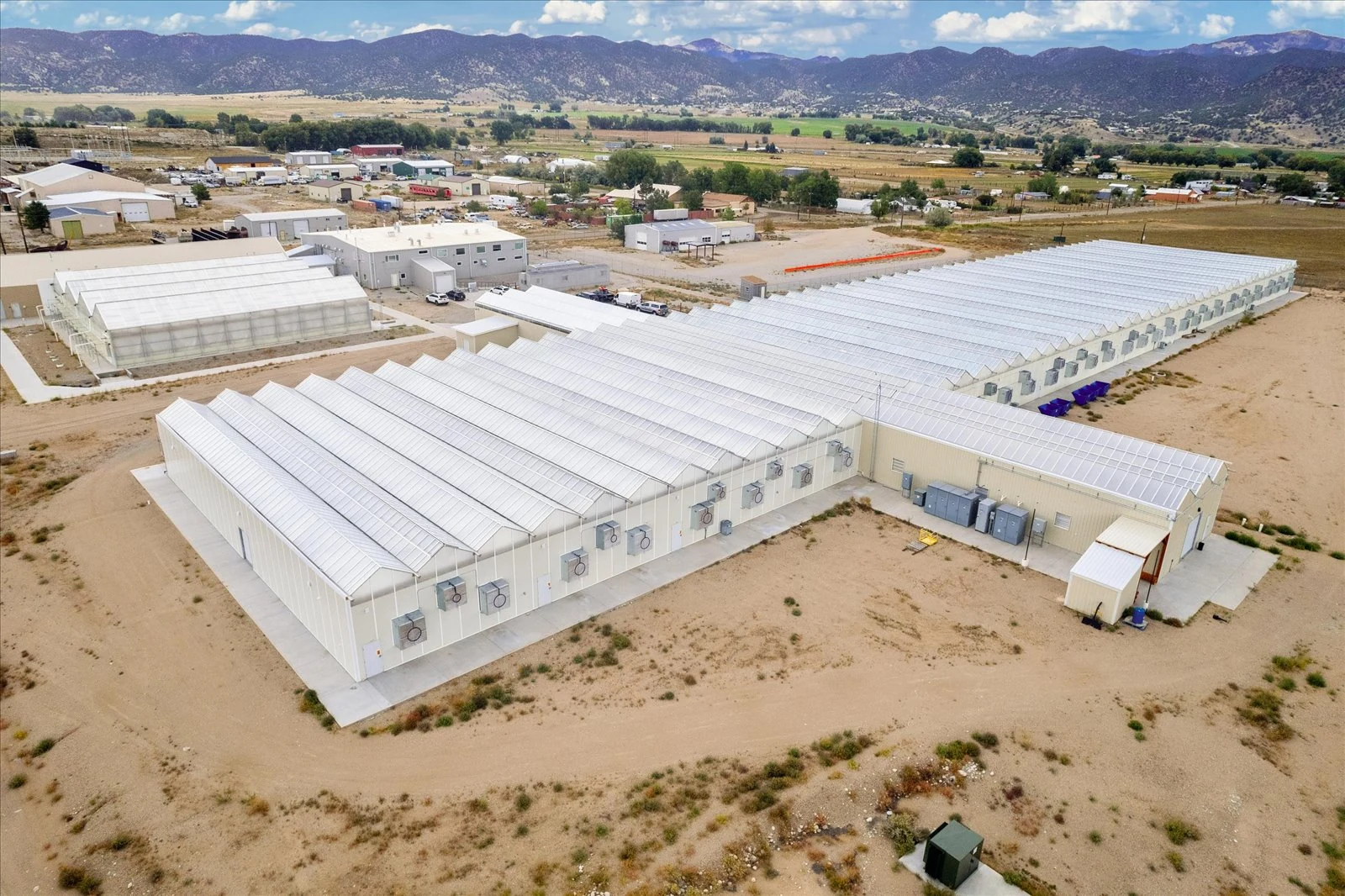
Warehouse Roofs Engineered for the Wind Loads of the Permian Basin
Most of the warehouse stock we work on around Midland is pre-engineered metal building product going up fast to keep pace with oilfield service demand. That means low-slope membrane over a steel deck or purlin-supported panel roof, often installed under schedule pressure that leaves fastening patterns and flashing details thinner than the wind loads in this part of Texas can tolerate.
Metal Building Roof Assemblies Common on Service Yard Warehouses
A large share of the warehouses we quote sit on service yards off Loop 250, the I-20 frontage roads, or the spur roads feeding pipe yards and equipment lots. These buildings usually start as standing seam or exposed-fastener R-panel roofing over open web steel joists. When that panel roof reaches the end of its service life, we look hard at whether a recover assembly makes sense over a tear-off, since pulling steel panel off a live warehouse without shutting down operations is rarely realistic for an operator running equipment in and out daily.
Recover assemblies over R-panel typically use a thermal barrier or high-density polyiso installed over the ribs with retrofit clips, then a mechanically attached TPO or PVC membrane fastened through the insulation into the purlins below. Getting the fastening pattern right matters more than almost anything else in the assembly, because purlin spacing on older Midland-area metal buildings does not always match modern fastener spacing charts, and we field-verify purlin location before laying out the pattern.
Wind Uplift and Fastening Patterns on Large Membrane Fields
Warehouse roofs in this market see straight-line wind events well above 70 mph most years, and the occasional downburst that pushes past 100 mph. On a membrane field the size of a typical service-yard warehouse, that means enhanced fastening at the perimeter and corner zones per ASCE 7 wind zone mapping, rather than only field-pattern spacing carried out to the edge. We calculate uplift pressures based on building height, parapet condition, and exposure category before specifying fastener spacing, because a warehouse standing alone on a flat service yard with no windbreak carries a different exposure category than one tucked behind other buildings in a denser industrial park.
Corner and perimeter zones are where we see the most repeat failures on older warehouse roofs in this market. Membrane that was fastened at a standard spacing in the field but never got tighter perimeter spacing tends to peel back first at the leading edge during a wind event, and the failure spreads inward from there. Retrofitting fastening density at those zones during a recover project is far cheaper than dealing with a full membrane loss later.
Membrane Chemistry for UV Load and Chemical Exposure
Warehouse roofs sitting over oilfield service operations are exposed to more than sun. Dust, produced-water residue tracked in on equipment, and occasional exposure to drilling fluids or hydraulic oil on yards that store equipment close to the building all factor into membrane selection. TPO handles UV load well and resists most of what gets tracked onto a roof from below, but its heat-welded seams need a fabricator who tests weld strength on the roof rather than trusting the manufacturer's stated weld temperature alone, since ambient heat here regularly pushes membrane surface temperature well past 170 degrees on a July afternoon and that changes hot-air weld settings.
PVC brings stronger chemical resistance where solvent or hydrocarbon exposure is a real risk, which we see on warehouses adjacent to fabrication shops or tank storage. EPDM still shows up on older warehouse roofs in this market, usually ballasted or fully adhered, and while it handles thermal movement well, the seam tape at laps is the weak point we check first on any EPDM roof inspection.
Insulation and R-Value in Conditioned Versus Unconditioned Space
Not every warehouse in this market is conditioned space. A raw equipment storage building might carry minimal insulation, while an office-warehouse combination building with a front counter and back shop needs enough polyiso to hit a reasonable R-value for the conditioned portion without over-insulating the open bay. We taper insulation on these buildings differently depending on use, and we push back when a spec calls for uniform R-value across a building that has both climate-controlled office space and a bay that only needs frost protection for stored equipment.
- Field verification of purlin or deck spacing before fastener layout
- Wind uplift calculation by exposure category, not a generic spec
- Membrane chemistry matched to chemical exposure on the yard, beyond UV alone
- Tapered insulation scoped to actual conditioned versus unconditioned area
- Enhanced perimeter and corner fastening at parapets and eaves
- Drain and scupper capacity checked against roof area, not assumed
Drainage on Long-Span, Low-Slope Warehouse Roofs
Warehouse roofs in this market tend to run long and low-slope, sometimes with internal drains that were never sized for the intensity of the hail-producing thunderstorms that roll through the Basin in spring. We check existing drain and scupper capacity against current roof area before recommending a membrane upgrade, because a new high-performance membrane installed over an undersized drainage system still ponds and still fails prematurely at the low points, regardless of membrane quality.
Where ponding is unavoidable due to structural deck deflection, we specify tapered insulation crickets to move water toward the drains rather than accepting standing water as a permanent condition. Standing water on a mechanically attached membrane accelerates seam stress and UV breakdown at the low point faster than anywhere else on the roof.
Common Questions on Warehouse Roof Assemblies
Can a metal panel warehouse roof be recovered without a full tear-off?
In most cases yes, provided the existing panel is structurally sound and not holding trapped moisture underneath. We evaluate panel condition and purlin spacing before recommending recover over tear-off, since a compromised deck changes the calculation.
How does wind exposure category change the roofing spec for a standalone warehouse?
A building standing alone on an open service yard carries higher wind pressure at corners and perimeter than one shielded by neighboring structures, which means tighter fastener spacing at those zones regardless of what a generic manufacturer spec sheet shows.
Does TPO or PVC hold up better against tracked-in oilfield residue?
PVC generally resists hydrocarbon and solvent exposure better than TPO over the long term, which matters on yards that store equipment close to the building. TPO still performs well against UV and general dust exposure where chemical contact is minimal.
Why do drains matter as much as the membrane itself?
A membrane can only perform as well as the drainage system lets it. Undersized or poorly placed drains cause ponding that stresses seams and accelerates membrane breakdown regardless of the product installed.
What causes most warehouse membrane failures we see in this market?
Under-fastened perimeter and corner zones from the original installation, usually because the roof was installed to a generic field-pattern spec instead of one calculated for the building's actual wind exposure.