Commercial Project Types
Manufacturing Plant Roofing in Midland, TX
Roof Assemblies for Fabrication Shops and Manufacturing Buildings in the Basin
Manufacturing buildings in this market range from pipe threading and fabrication shops supporting the oilfield to smaller machine shops and metal fabrication operations that grew up around the drilling and completions side of the business. The roofs over these buildings carry a different set of stresses than a plain storage warehouse, starting with what happens underneath them.
Spark and Heat Exposure from Welding and Cutting Operations
A fabrication shop running cutting torches, plasma tables, or welding stations generates heat and occasional spark exposure that reaches the underside of the roof deck, particularly on buildings with open steel joists and no ceiling. We look at membrane fire rating and the presence of a thermal barrier between the deck and insulation on these buildings more carefully than on a general storage warehouse, since a membrane assembly rated for standard occupancy is not always adequate over a shop generating this kind of heat load from below.
Roof penetrations for welding exhaust and fume extraction systems also concentrate heat right at the curb, and that curb flashing sees thermal cycling well beyond what a typical HVAC curb experiences. We flash these penetrations with materials rated for the higher sustained temperature rather than treating them like a standard rooftop unit curb.
Rooftop Curb Loads and Vibration from Process Equipment
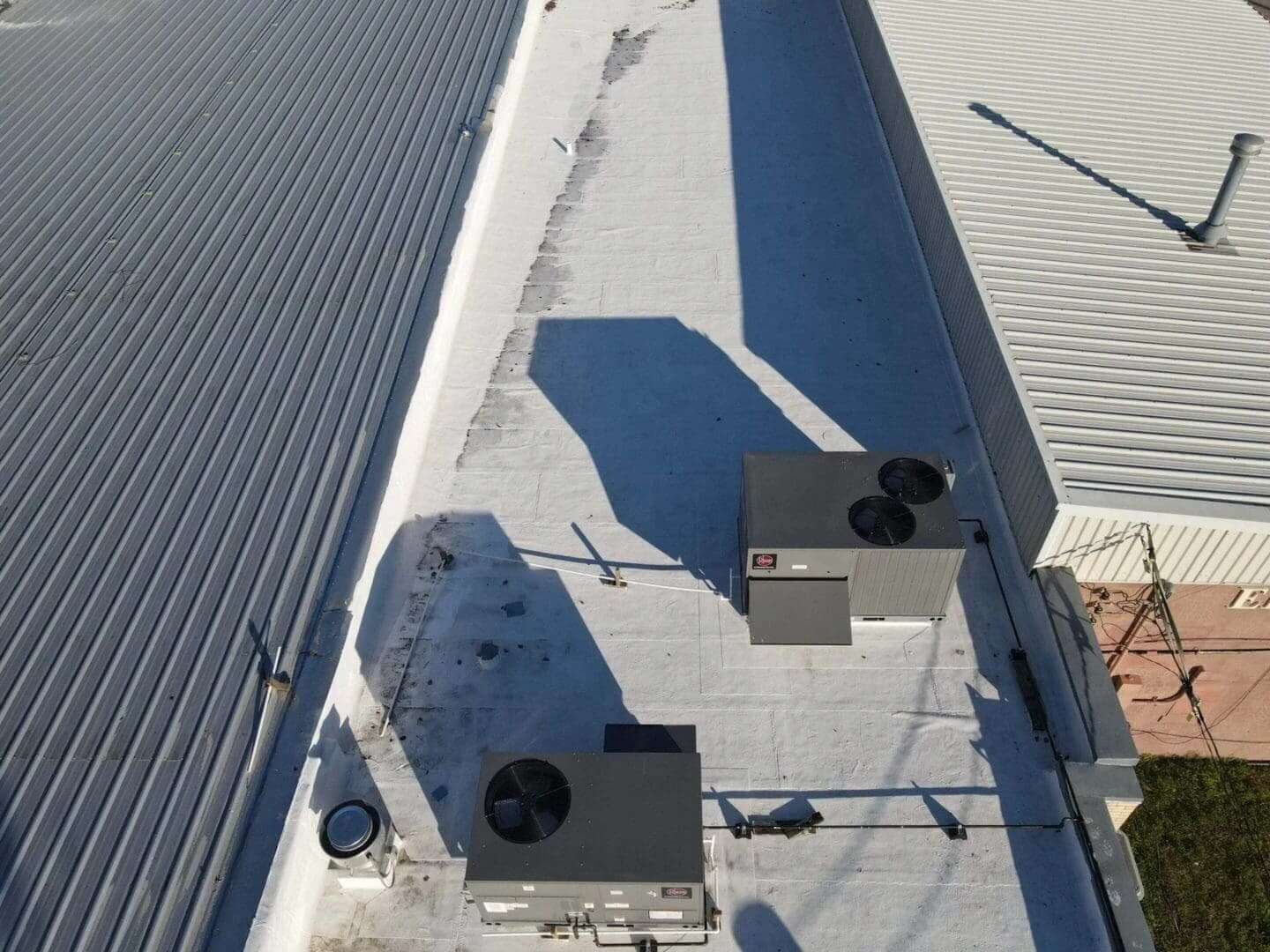
Manufacturing buildings in this market often carry heavier rooftop equipment than a standard office or retail building, dust collection systems, compressed air equipment, and process cooling units among them. That equipment adds structural load the original roof deck may not have been designed to carry, and it introduces vibration that works against membrane fastening and curb flashing over time in a way that static equipment does not.
Before specifying any roof work on a manufacturing building, we check curb attachment and structural support under new or existing rooftop equipment, because a curb that has worked loose from vibration is a common source of leaks that gets misdiagnosed as a membrane problem when the actual issue is a failed curb seal.
Dust Collection and Exhaust Penetrations
Metal fabrication and machining generate fine metal dust and debris that settles on roof surfaces near exhaust discharge points, and that dust holds moisture against the membrane longer than a clean roof surface would. We see accelerated membrane wear in a radius around dust collection discharge points on several shop roofs in this market, and where that pattern shows up, we recommend redirecting discharge away from the membrane field or adding a protective walkway pad in that zone rather than just replacing the affected membrane section repeatedly.
- Membrane fire rating and thermal barrier review for shops with cutting or welding operations
- Curb attachment and structural support check under heavy process equipment
- Fume extraction and exhaust curb flashing rated for sustained heat exposure
- Dust and debris discharge points evaluated for membrane wear patterns
- Vibration-resistant fastening at equipment curbs subject to constant operation
Insulation Strategy Where Interior Process Heat Offsets Winter Load
A working fabrication shop generates enough interior heat from equipment and processes that the winter heating load calculation looks different than it would for an unoccupied warehouse of the same size. We factor actual process heat gain into the insulation and vapor barrier strategy rather than defaulting to a generic R-value target, since over-insulating a shop that already runs warm from equipment heat can trap moisture at the deck if the vapor drive direction is not accounted for correctly.
Vapor drive matters more on manufacturing buildings than most other commercial types in this market because interior humidity from process operations, coolant, or wash-down areas pushes moisture toward the roof deck differently than a dry office space does. We evaluate vapor barrier placement based on actual interior conditions rather than assuming a standard commercial vapor profile.
Reroofing Around an Operating Shop
Very few manufacturing tenants can shut down production for a full reroof, which means we sequence tear-off and membrane installation in zones that keep critical shop areas covered and dry throughout the project. Coordinating around active process equipment, overhead crane clearances, and existing rooftop curbs takes more planning on a manufacturing reroof than on an empty warehouse, and we build that sequencing into the schedule before work starts rather than adjusting on the fly.
Frequently Raised Questions on Manufacturing Roof Projects
Does a fabrication shop need a different membrane than a standard warehouse?
The membrane chemistry itself may be similar, but the fire rating and thermal barrier requirements underneath it often need to be higher where cutting, welding, or open flame processes operate below the deck.
Why do curb leaks get misdiagnosed as membrane failures?
Vibration from process equipment loosens curb seals over time, and the resulting leak looks like a membrane problem at the surface when the actual failure point is the curb attachment itself.
How does interior process heat change the insulation plan?
Shops that generate substantial interior heat from equipment need a vapor barrier and insulation strategy calculated around that actual heat gain rather than a generic commercial target, or moisture can get trapped at the deck.
Can a reroof happen while the shop stays operating?
In most cases yes, by sequencing the work in zones and coordinating around crane clearances and active equipment, though it takes more scheduling coordination than reroofing an empty building.
What causes accelerated wear near exhaust and dust collection points?
Fine metal dust and debris settling near discharge points holds moisture against the membrane longer than a clean surface, which speeds up localized wear in that zone.