
Roof Systems
Silicone Roof Coatings in Midland, TX
Silicone Coating: Buying Years Back on a Roof That Isn't Ready to Die Yet
Not every roof in Midland needs a tear-off. A lot of them need a coating that stops the clock, and silicone is usually the chemistry we reach for when the underlying membrane is sound but the surface is aging out. It's a maintenance strategy as much as a product, and it only works if the roof underneath earns the investment.
Why Silicone, Specifically
Roof coatings come in several chemistries — acrylic, urethane, silicone — and each has a niche. Silicone's defining trait is resistance to ponding water. Where acrylic coatings can soften or degrade under sustained standing water, silicone holds up to it, which matters on any Midland roof with drainage that isn't perfect, and on flat commercial roofs that's most of them at some point in their life. A low spot near a scupper or an interior drain that holds water after a storm is exactly the condition silicone was formulated to handle.
Silicone also resists UV degradation well, which counts for a lot given how much direct sun a West Texas rooftop takes across a year. A properly applied silicone coating maintains its reflectivity and flexibility longer under that UV load than most other coating chemistries.
What Silicone Coating Actually Does to an Existing Roof
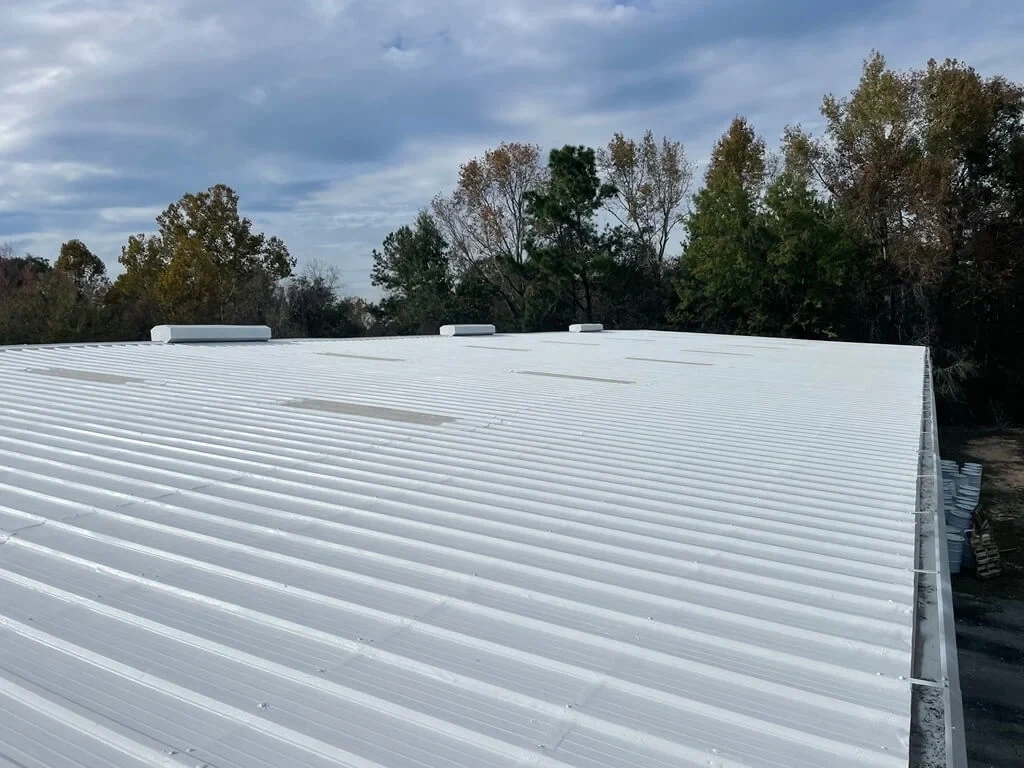
A silicone coating system doesn't replace the waterproofing membrane underneath — it seals and protects it. Applied at the manufacturer's specified thickness, usually with a fabric-reinforced detail at seams, penetrations, and any existing cracks, the coating creates a monolithic, joint-free surface over the existing roof. On an aging TPO, modified bitumen, or metal roof that's still structurally sound but showing surface wear, chalking, or minor seam issues, that unbroken layer buys real service life without the cost and disruption of a full tear-off.
It does not fix a structurally compromised deck, saturated insulation, or a membrane that's already failing at the seams in a widespread way. We test moisture content across the existing roof before recommending coating over reroofing, since coating over a wet substrate just traps the problem under a new surface.
Application and Substrate Prep
Coating performance depends almost entirely on substrate prep, more so than with a new membrane install. The existing roof gets pressure-washed, any loose or degraded material removed, and any active leaks repaired before the coating goes down. Primer is applied where the substrate needs it — metal roofs in particular often need a specific primer for adhesion — and the coating itself typically goes down in two passes to hit the manufacturer's specified mil thickness evenly.
Skipping prep steps to save time is the single most common reason a coating job underperforms its expected service life, and it's the step we spend the most time on relative to the actual coating application.
Roof types silicone coating extends well in Midland
- Aging TPO or PVC single-ply roofs with sound seams but surface wear
- Modified bitumen roofs with granule loss but no widespread ply separation
- Metal roofs on service-yard and warehouse buildings needing rust and seam sealing
- Roofs with chronic minor ponding near drains or low-slope areas
- Any structurally sound roof nearing end-of-warranty life where a full reroof isn't yet in the capital budget
Recoat Cycles and Long-Term Maintenance
Silicone coatings aren't a one-time fix — they're part of an ongoing maintenance cycle. Coating thickness wears down gradually under UV exposure and weathering, and a recoat at the right interval keeps the system performing rather than waiting until reflectivity and waterproofing have both degraded. We build recoat timing into the maintenance conversation up front rather than treating the first coat as a permanent solution.
Hail is the one variable that can shorten that cycle unpredictably. A hard hail event can pit or crack a coating that was otherwise performing fine, and we recommend a walk-through inspection after any storm large enough to leave marks on vehicles or metal siding.
Wind and Reflectivity Considerations
A silicone-coated roof doesn't change the underlying membrane's wind-uplift attachment — coating is a surface treatment, not a structural fix — so any pre-existing fastening or adhesion issues in the substrate need to be addressed before or during the coating project, not left in place under new material. Reflectivity from a properly applied silicone coating does reduce surface temperature and heat gain into the building, similar to a white membrane, which is a real energy benefit on a conditioned building carrying a big flat roof.
Questions Owners Ask About Silicone Coating
Can silicone coating fix a leaking roof?
It can address minor seam and surface issues, but active structural leaks or saturated insulation need to be repaired or replaced before coating, not sealed over.
How does silicone handle ponding water compared to acrylic?
Silicone holds up to sustained ponding significantly better than acrylic, which can soften under standing water. That's the main reason we recommend silicone on roofs with any drainage imperfection.
Does coating work on a metal roof?
Yes, with proper primer and seam detail, silicone coating is a common way to seal fastener penetrations and seams on aging metal roofs at oilfield service yards and warehouses.
How often does a silicone roof need recoating?
It depends on initial mil thickness, UV exposure, and hail history, which is why we build recoat timing into an ongoing maintenance plan rather than a one-time application.
Is coating cheaper than a full reroof?
Generally yes for a roof that still has structural life left, though it's not a substitute for reroofing once the underlying membrane or deck has failed rather than simply aged.