Commercial Roofing Services
Metal R-Panel Roofing in Midland, TX
Exposed-Fastener R-Panel Roofs for Oilfield Service Yards
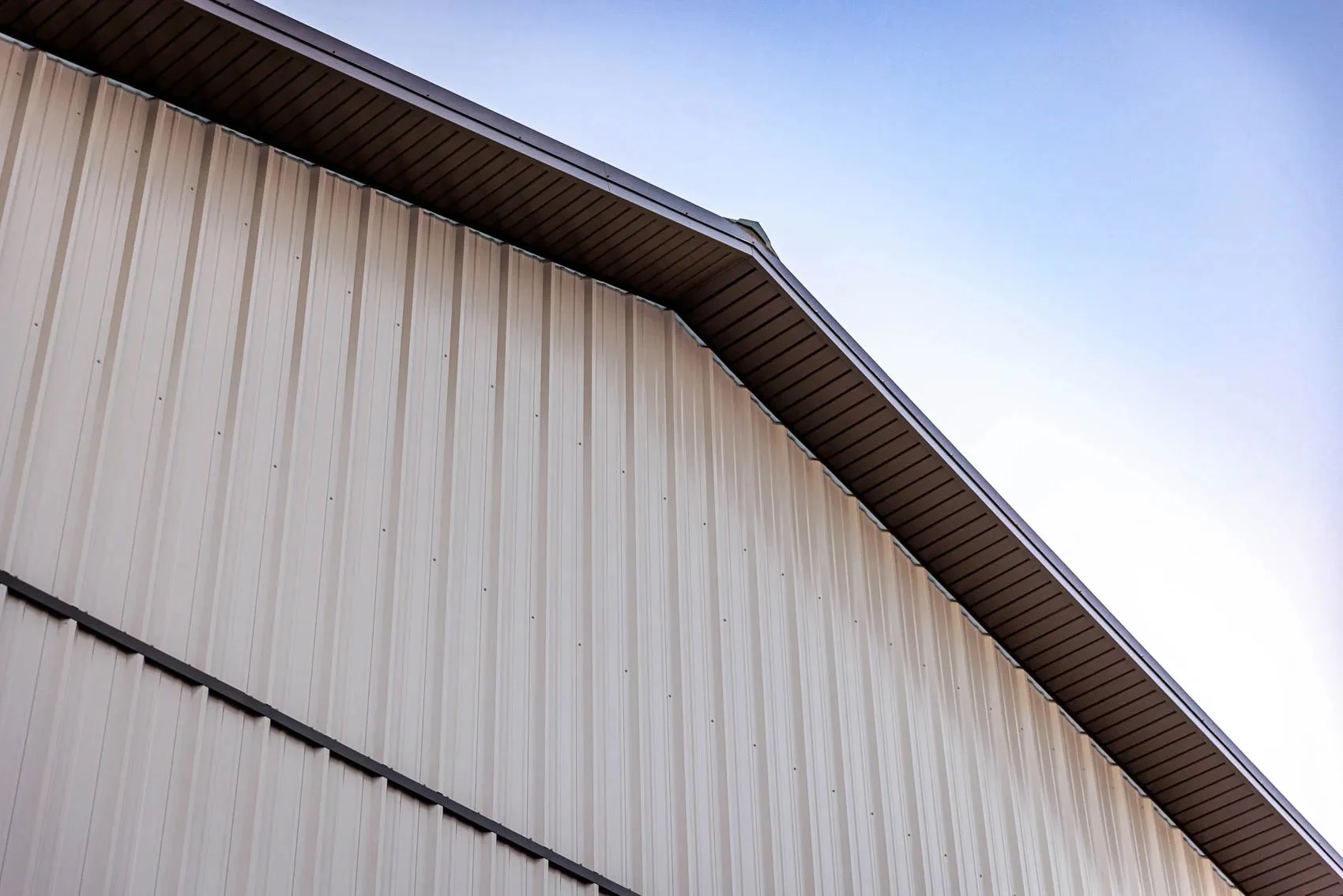
R-panel is the roof we install and repair most often on pre-engineered metal buildings out along the highway spurs serving Midland's oilfield operations — tank battery support structures, pipe yards, equipment shops, and the metal warehouses that seem to multiply every time the oil-price cycle turns up. It's an economical, fast-to-install system, but its exposed-fastener design has specific failure modes this climate accelerates.
Why Exposed Fasteners Are the Weak Point
R-panel attaches directly through the panel face into purlins with screws, unlike standing seam's concealed clip system. Every one of those fasteners has a rubber washer seal that has to stay compressed and watertight for the life of the roof, and this region's daily thermal cycling works against that. As the panel expands and contracts through wide temperature swings between a summer afternoon and a cool night, the fastener holes elongate slightly over time — a phenomenon installers call fastener back-out — and the washer seal degrades faster under repeated UV exposure and thermal stress than it would in a milder climate.
That's the single most common repair call we get on R-panel buildings: not a torn panel or a structural failure, but scattered fastener locations that have backed out enough to leak, usually starting a few years after installation and worsening every year after that if the panel isn't rescrewed or the fasteners replaced with oversized ones.
Rescrewing a roof with oversized fasteners is a common mid-life intervention we recommend on buildings where scattered fastener back-out has started but the panels themselves remain sound. It's considerably cheaper than a full panel replacement and, done thoroughly across the whole roof rather than just the worst spots, buys years of additional service life.
Fastening Pattern and Purlin Spacing
Purlin spacing determines how much of the panel span is unsupported between fastening rows, which directly affects both wind uplift performance and how much the panel deflects under foot traffic or ponding. On pre-engineered buildings where purlin spacing was set to minimize structural steel cost rather than to optimize roof performance, we sometimes find spans wider than we'd prefer for the wind exposure category the building actually sits in — an open oilfield yard with no surrounding structure to break wind load.
Where we're re-roofing rather than doing new construction, we can't always change purlin spacing, but we can tighten the fastening pattern within what the existing structure allows, and we pay close attention to fastener placement at eaves, ridges, and endwalls where uplift pressures run highest.
Chemical and Physical Exposure on Service Yard Buildings
R-panel buildings near active oilfield operations deal with a specific set of exposures beyond weather:
- Grease and hydrocarbon overspray from nearby equipment, compressors, and vehicle maintenance
- Dust and caliche buildup that can hold moisture against fastener locations if not periodically cleared
- Foot traffic from maintenance crews accessing rooftop vents, exhaust stacks, or tank vent lines
- Corrosion at cut edges or fastener penetrations where the panel's protective coating has been compromised
- Wind-driven sand and dust abrasion on painted panel surfaces over years of exposure
Paint system selection matters more on these buildings than people assume — a quality PVDF coating resists the fading and chalking that a basic polyester finish shows within a few years of this UV and dust exposure, and it's a cheap upgrade relative to the cost of repainting or replacing panels early.
Endwall and rake trim details are another common leak source on R-panel buildings, since these transitions see more wind-driven rain and require careful sealant work that ages faster under UV exposure than the panel field itself. We inspect these details specifically during any service call rather than assuming a leak originates from the panel field alone.
Recoating and Recover Options for Aging R-Panel
Where an existing R-panel roof is structurally sound but showing fastener leaks and coating wear, a full panel recover or an acrylic or silicone coating system often extends service life significantly cheaper than a full tear-off and replacement. Coating over R-panel typically involves cleaning, treating rust spots, sealing or replacing failed fasteners, and applying a reflective coating that both waterproofs the fastener penetrations and cuts surface temperature under Midland's summer sun.
We evaluate the panel's structural condition and fastener count before recommending a coating versus a full panel replacement — a roof with widespread rust-through at seams or purlins isn't a good coating candidate regardless of how well the coating itself would perform.
Questions About R-Panel Roofs on Service Buildings
Why do R-panel roofs leak at fasteners years after installation instead of right away?
Thermal cycling gradually elongates fastener holes and degrades the rubber washer seal over repeated expansion and contraction. It's a slow failure mode, which is why maintenance inspections catch it before it becomes a widespread leak.
Should we switch to standing seam instead of repairing R-panel?
For a utilitarian service yard building, repairing or recovering R-panel is usually the more cost-effective path. Standing seam's concealed-fastener advantage matters more on buildings where appearance or a longer expected lifespan justifies the higher cost — see our standing seam page.
Can R-panel handle the grease and chemical exposure near tank batteries?
The panel's paint system provides some resistance, but heavy sustained exposure will degrade coating faster than in a cleaner environment. We recommend periodic inspection and touch-up coating on buildings with this exposure.
Is a coating a real fix or just a temporary patch on an aging R-panel roof?
Done properly — with fastener repair and rust treatment first — a coating is a legitimate extension of service life, not only cosmetic. See our acrylic coatings page for the process on metal roofs specifically.
How often should fasteners be checked on an R-panel roof out here?
Given the thermal cycling and UV exposure in this market, we recommend more frequent fastener inspection than a milder climate would require — catching back-out early is far cheaper than repairing water damage after a leak develops.