
Commercial Roofing Services
Roof Drains & Scuppers in Midland, TX
Drainage Design for a Climate That Is Dry Until It Isn't
Midland goes long stretches with almost no rain, then gets hit with a short, intense downpour that dumps more water in an hour than the roof has seen in weeks. Drain and scupper sizing has to handle that swing, and it has to account for the windblown dust and debris that builds up in dry periods and clogs drainage right when a storm arrives.
Internal Drains Versus Scuppers
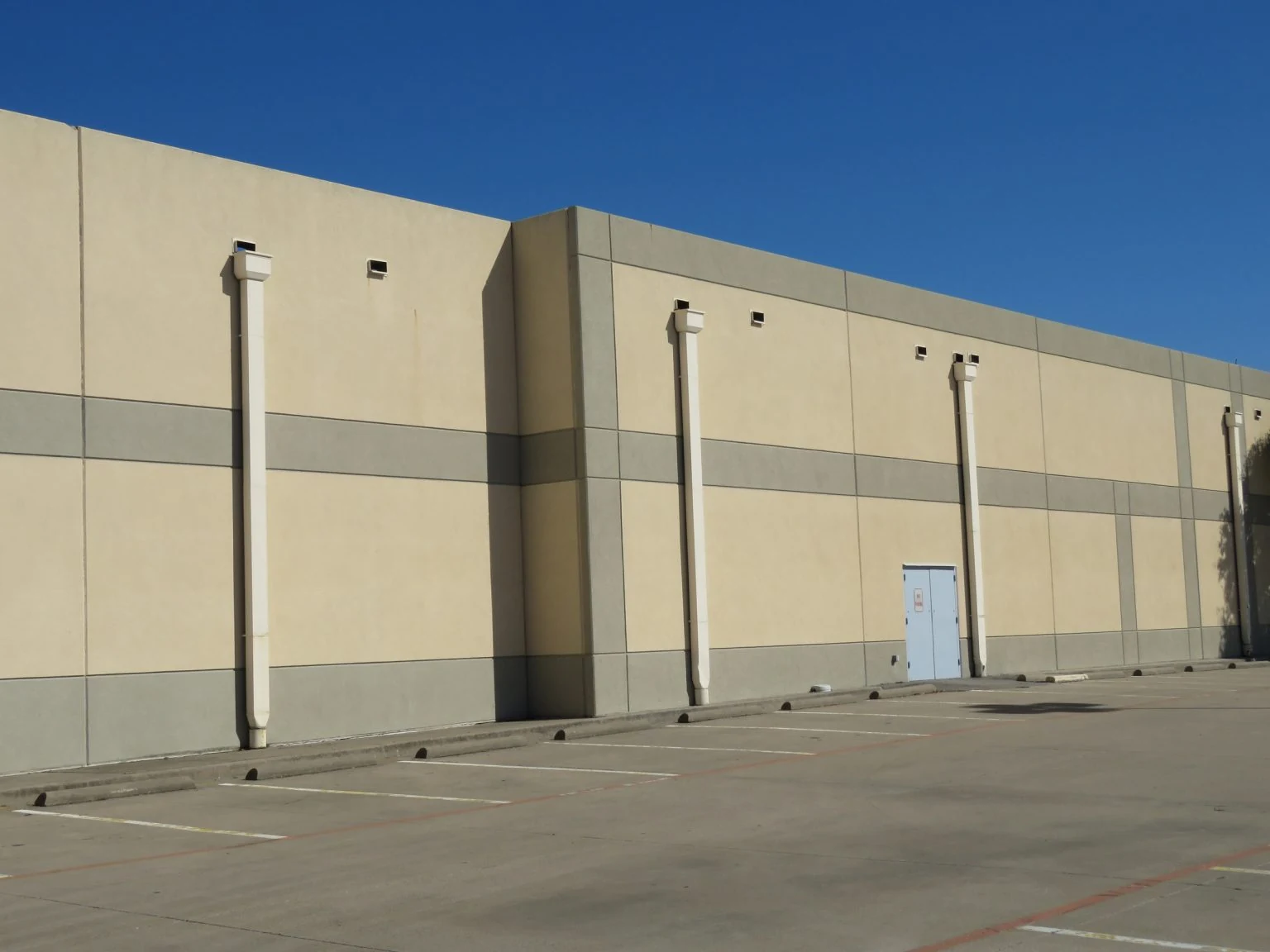
Internal roof drains work well on larger low-slope roofs where the plumbing can route straight down through the building, common on distribution centers and larger office and retail buildings. Scuppers, which drain water out through the parapet wall to an exterior downspout or splash area, tend to show up more on smaller buildings and additions where running internal plumbing is not practical.
Each has a different failure mode worth planning around. An internal drain that clogs backs water up across the roof field with no visible warning until ponding is already significant. A blocked scupper is often easier to spot from ground level, but a scupper set at the wrong elevation relative to the roof's low point will not drain effectively even when clear.
Sizing Drainage for Short, Intense Rainfall
Drain and scupper capacity has to be sized against real rainfall intensity, not an assumption based on how little it rains here on average. West Texas thunderstorms can deliver a heavy rainfall rate in a short window, and a drainage system undersized for that intensity will pond water even though the roof drains fine during a longer, gentler rain.
Overflow provisions matter as much as primary drainage. Code-required overflow scuppers or secondary drains exist specifically for the scenario where a primary drain clogs during a storm, and we verify those overflow paths are actually clear and set at the correct elevation rather than just confirming they exist on the original roof plan.
Ponding Water and What It Does to a Roof Over Time
Standing water on a low-slope roof accelerates membrane aging at that specific spot, adds dead load the structure may not be designed to carry indefinitely, and creates a spot where debris and organic growth accumulate faster than on a roof that drains promptly. Ponding that persists more than a couple of days after a rain event points to either a drainage capacity problem or a slope issue in the roof deck itself.
We distinguish between minor, short-duration ponding that clears within a day, which is common on flat commercial roofs and not usually a concern, and persistent ponding that signals an actual drainage or slope deficiency that needs correcting.
Dust and Debris Buildup Between Rain Events
Long dry stretches with periodic dust storms mean drains and scuppers collect windblown sediment even when no rain has fallen recently. That buildup is easy to overlook because it does not cause a visible problem until the next heavy rain overwhelms a partially blocked drain. We clear drains and scuppers as a standing item during routine maintenance visits rather than waiting for a drainage failure to prompt the check.
Gravel ballast roofs and roofs near unpaved yards or active construction see faster debris accumulation at drains than a clean membrane roof in a paved commercial area, and we adjust clearing frequency to match that exposure.
Tapered Insulation and Slope Corrections
Persistent ponding that is not explained by a clogged drain often traces back to a roof deck that was never sloped correctly, or that has settled unevenly over time. Tapered insulation systems, typically installed during a reroof or recover, correct this by building slope into the insulation layer itself rather than relying on the original deck slope.
This is one of the reasons we evaluate drainage as part of any reroof scope rather than treating it as a separate project. Correcting a drainage problem while the roof is already open avoids a second mobilization later.
- Primary drain and scupper capacity checked against real storm intensity
- Overflow scupper or secondary drain elevation and clearance verified
- Routine debris and dust clearing at every scheduled maintenance visit
- Ponding duration tracked to distinguish minor from persistent issues
- Deck slope evaluated when ponding is not explained by drain condition
- Tapered insulation considered during reroof or recover projects
Inspecting Drainage as Part of Routine Roof Care
Drains and scuppers should be checked at every roof inspection and maintenance visit, not only when a ponding problem is already visible. A five-minute check of drain strainers and scupper openings during a routine visit prevents the kind of drainage failure that shows up as a flooded roof deck during the next hard rain.
Drainage Questions From Facility Owners
Is some ponding water normal on a flat commercial roof?
Minor ponding that clears within a day or so after a rain event is common on low-slope roofs and not usually a concern. Ponding that persists longer points to a drainage or slope problem worth investigating.
Why do drains clog here when it barely rains most of the year?
Windblown dust and debris build up in drains and scuppers during dry stretches regardless of rainfall, and that buildup only becomes obvious once a storm arrives and the drain cannot keep up.
What is the difference between a primary drain and an overflow scupper?
The primary drain handles normal drainage. The overflow scupper or secondary drain is a code-required backup set at a slightly higher elevation, so water still has an exit path if the primary drain clogs during a storm.
Can drainage problems be fixed without a full reroof?
Sometimes. Clearing debris or correcting a drain and scupper condition can resolve many issues. Persistent ponding from a slope problem usually requires tapered insulation work, which is more efficient to do during a planned reroof.
How often should drains and scuppers be cleared?
At every scheduled maintenance visit, with more frequent attention for roofs near unpaved yards, gravel ballast, or active construction where debris accumulates faster.