
Commercial Roofing Services
Edge Metal, Coping & Gutters in Midland, TX
Edge Detail Is Where Most Wind Failures Actually Start
A roof rarely blows off from the middle out. Wind failures start at the perimeter, where edge metal, coping, and gutter attachments take the highest uplift pressure of anywhere on the building. We design and fasten these details to match the wind exposure this region actually sees, not a generic spec.
Coping Profile and Fastening for Open, Flat Terrain
Midland sits on flat, open ground with nothing to break up wind before it hits a building, which means parapet coping takes direct, sustained pressure during a straight-line wind event. We follow tight fastener spacing on coping cleats and cover plates, since a coping section that comes loose at one point tends to peel progressively down the parapet run once wind gets underneath it.
Cleat design matters as much as fastener spacing. A continuous cleat with properly engaged coping cover creates a mechanical interlock that resists uplift even if a fastener or two loosens over time, which is a more forgiving failure mode than a coping system that relies entirely on face fasteners with no interlock.
Gutter and Drainage Integration at the Edge
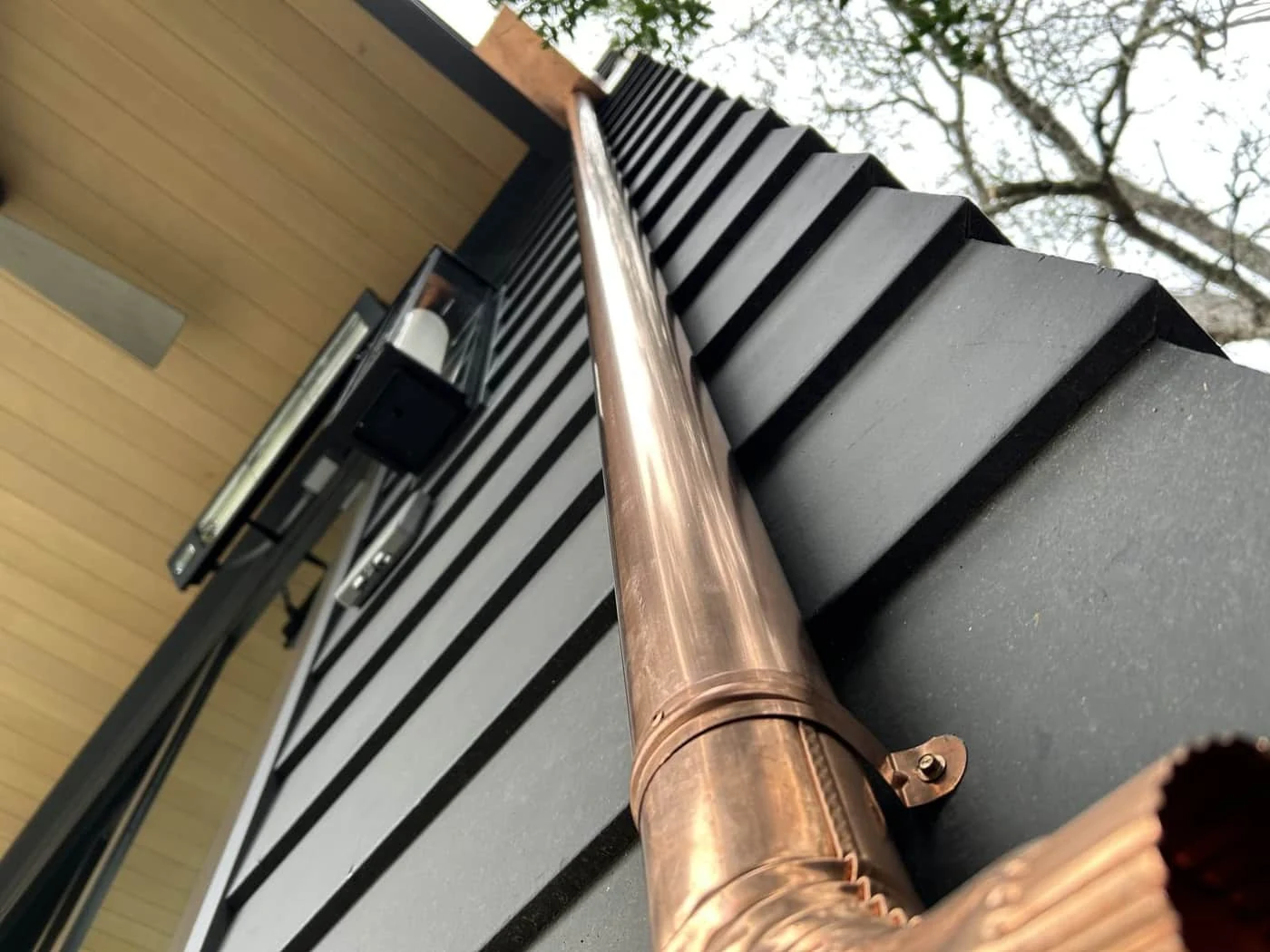
Where a building uses perimeter gutters instead of internal drains, that gutter system has to handle both the intense, brief downpours common to West Texas thunderstorms and the wind that often comes with them. We size gutter capacity and hanger spacing for real rainfall intensity rather than steady drizzle, since a gutter that overflows during a short, hard downpour sends water back against the wall system instead of away from the building.
Hanger spacing and gutter attachment to the fascia or edge metal also has to account for wind, since a gutter system torn loose during a storm becomes debris that can damage the roof membrane or anything below it.
Common Edge Failures We See in This Market
Coping blow-off during high wind is the most frequent edge failure we respond to, usually starting at a section end or corner where the coping run terminates and a gap or weak splice gives wind an entry point. Edge metal separating from the fascia, particularly on older buildings where the original fastening pattern predates current wind design standards, is the second most common issue.
On buildings near oilfield service operations, we also see edge metal and gutters affected by debris impact, since equipment movement and material staging near a building can chip or dent edge details in ways that eventually compromise the water-shedding function even before wind gets involved.
Metal Gauge and Finish for UV and Thermal Cycling
Edge metal and coping see the same intense UV exposure as the membrane, plus daily thermal expansion and contraction that is more pronounced at a metal edge than across the membrane field. We spec metal gauge heavy enough to resist denting and oil-canning under that thermal cycling, and finish coatings rated for UV exposure so color and coating integrity hold up rather than chalking and fading within a few years.
Expansion joint spacing in coping and edge metal runs also matters more here than in milder climates, since a run without adequate expansion allowance can buckle or pull fasteners loose as metal expands and contracts through Midland's wide daily temperature swings.
Coordinating Edge Work With Membrane Repairs
Edge metal and coping work rarely happens in isolation from the membrane itself, since the membrane termination detail ties directly into the edge system. When we replace or repair edge metal, we check the membrane termination at that same location and correct it if it is not properly sealed, rather than leaving a mismatched detail that will leak or fail again regardless of how good the new edge metal is.
- Continuous cleat and interlocking coping cover design
- Fastener spacing tightened at corners and section ends
- Gutter and hanger sizing for high-intensity rainfall
- Metal gauge selected for dent and oil-can resistance
- UV-rated finish coatings on all exposed edge metal
- Expansion joint spacing matched to thermal cycling range
Inspecting Edge Detail Before It Fails
Edge metal and coping condition should be part of every roof inspection, not an afterthought behind membrane condition. A loose cleat, a failing splice, or a gutter hanger pulling away from the fascia is a cheap fix caught early and an expensive one caught after a wind event turns it into a section of missing metal and a compromised membrane termination.
Edge Metal and Coping Questions From Facility Managers
Why does coping fail before the membrane usually does?
Coping and edge metal absorb the highest wind uplift pressure on the building, and a failure at a splice or corner can start a progressive peel down the parapet before the membrane field is affected at all.
Does gutter sizing really matter in a dry climate like this?
Yes. West Texas storms deliver short, intense rainfall even in an otherwise dry climate, and undersized gutters overflow during those events regardless of how little it rains the rest of the year.
How often should coping and edge metal be inspected?
At every scheduled roof inspection, with particular attention after any wind event, since loose fasteners or a failing splice are inexpensive to fix early and expensive once they lead to a section blow-off.
Can edge metal be repaired without touching the membrane?
Sometimes, but we always check the membrane termination at that location during edge work, since the two details are connected and a mismatched repair can leak even with new edge metal in place.
What metal gauge do you recommend for this climate?
We spec gauge based on the specific building's exposure and wind zone, generally heavier than code minimum, to resist denting, oil-canning, and the fastener fatigue that comes from Midland's wide daily temperature swings.